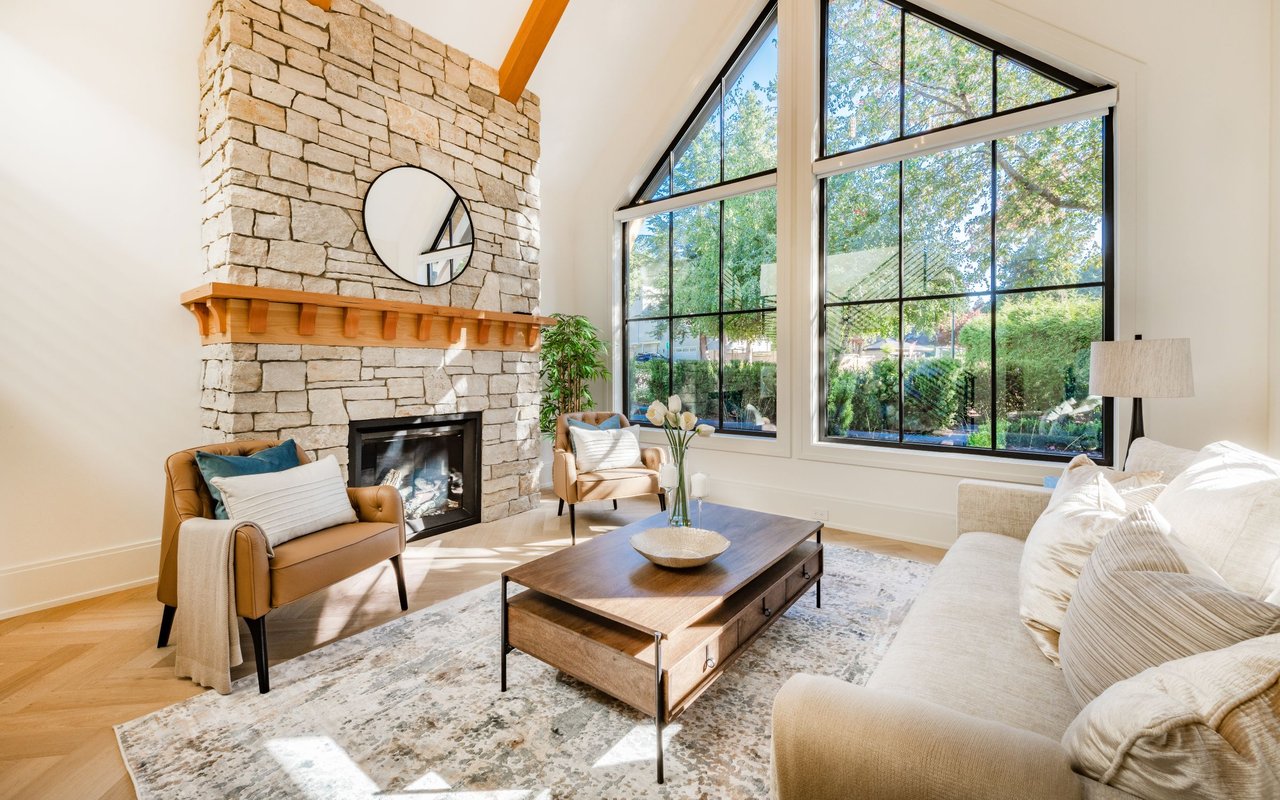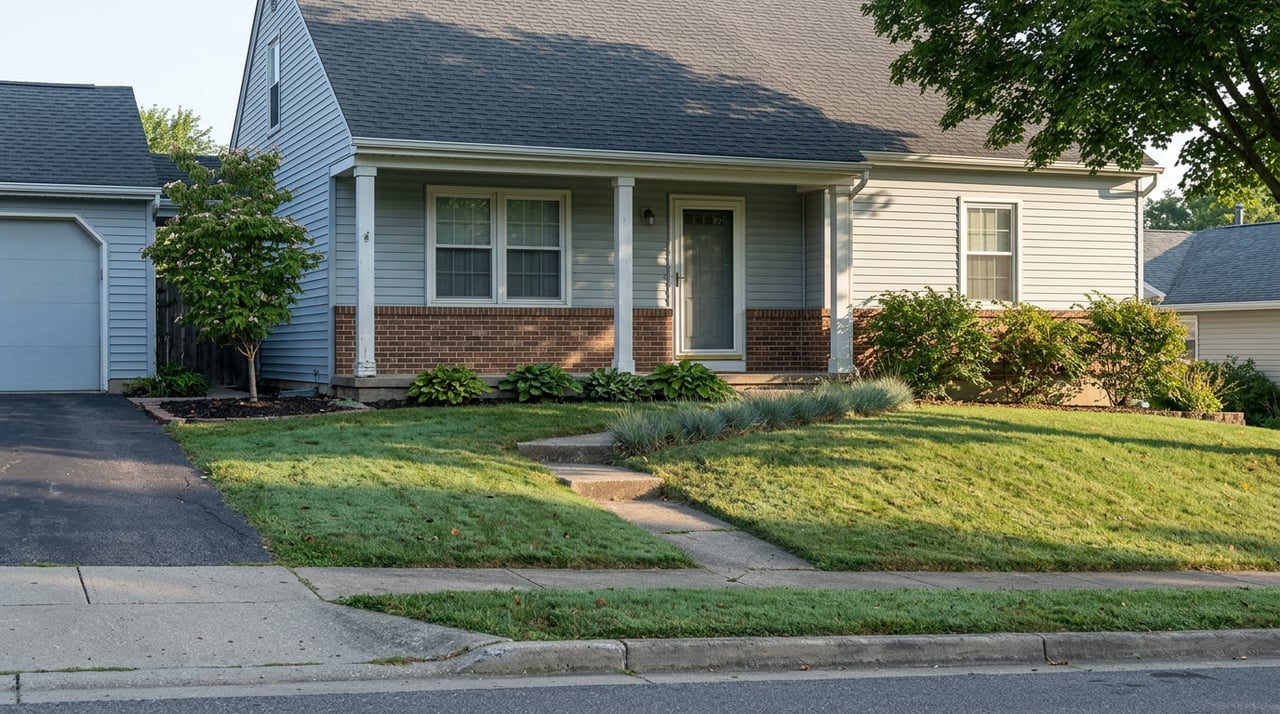
Two Penn Hills homes list for the same price this month. Same neighborhood, same square footage range, same age of construction. One buyer's total monthly payment lands comfortably under budget. The other's runs noticeably higher, and the difference has nothing to do with the mortgage rate either buyer locked in.
The gap is property tax, and it does not track the sale price the way most buyers assume. In Allegheny County, taxes are layered across three separate governments, school district, municipality, and county, each with its own millage rate, and each applied to the parcel's assessed value rather than what you actually paid for the house. Assessed value and sale price are routinely different numbers here, sometimes by a wide margin, because the county's assessment cycle does not move in lockstep with what homes are actually selling for. Two houses can close at an identical price and still carry two different real monthly costs, and the median price quoted on any portal tells you nothing about which one you are buying.
That is the friction that catches buyers moving to Penn Hills off guard, and it is worth understanding before it is worth chasing a listing.
Why the Median You See Isn't the Market You're Buying Into
If you have already looked up Penn Hills online, you may have noticed the numbers do not agree with each other. One tracker puts the average sale price at $175,000 for the most recent month reported, up 8 percent from a year earlier. Another puts the median list price at $194,000 as of May 2026. Neither figure is wrong. They are measuring a market that is not one thing.
Penn Hills covers a wide range of housing stock, from smaller starter homes that trade well under $150,000 to larger move-up properties well north of that. Average and median react differently when a market has that much spread, so the two numbers you find online are not a data error. They are a symptom of a place where the entry-level segment and the move-up segment behave almost like separate markets sharing one municipal boundary.
Put that next to the statewide context. Pennsylvania's median sale price reached $338,939 in June 2026, up 5.9 percent year over year. Penn Hills, at roughly half that figure or less depending on which slice of the market you are pricing, sits well below the state median. That gap is exactly why the neighborhood draws both first-time buyers stretching toward homeownership and investors underwriting value-add rehabs. It is also why quoting "the median" to either group misses the point. The number that matters is the one attached to the specific block and the specific parcel, not the municipality-wide average.
The County Just Put Real Money Behind This Exact Segment
In late July 2026, the Redevelopment Authority of Allegheny County approved $6 million across two housing initiatives. One million dollars funds a home repair program aimed at existing homeowners across the county, part of County Executive Sara Innamorato's Housing for All executive order. The remaining five million seeds a new Housing Acquisition Fund, which aims to eventually raise about $50 million from private and philanthropic sources to acquire between 750 and 1,000 existing apartment units and preserve them as affordable housing, with roughly 375 to 500 of those units prioritized for people exiting homelessness.
The fund's stated target is what the county calls naturally occurring affordable housing, meaning older multifamily buildings that are already affordable simply because of their age and condition, not because of a subsidy program. That description matches a meaningful slice of Penn Hills' existing stock, where small multi-unit properties and modest older buildings are common and where investor interest in value-add inventory has been steady. If the fund executes as designed, it represents new competition and new capital circling the exact category of property that has historically drawn small investors to Penn Hills in the first place. That is worth knowing whether you are the investor trying to buy before that capital arrives, or the owner of an older duplex who may find more interest in the property than the current listing price assumes.
The home repair side matters just as directly for owner-occupants. A meaningful share of Penn Hills' housing stock predates 1978, which brings lead-safe renovation rules into play for any project that disturbs old paint. A county-backed repair fund aimed at existing homeowners is a resource worth checking into before assuming a needed roof or HVAC replacement has to come entirely out of pocket.
Turner Dairy Farms Is Expanding, Not Leaving
Housing programs are one signal. Employer investment is another, and Penn Hills got a concrete one in July 2026. As part of a nearly $90 million round of Redevelopment Assistance Capital Program funding that Allegheny County secured for 60 projects across the region, Turner Dairy Farms received a $1.32 million grant to expand cold storage capacity at its Penn Hills facility, strengthening regional food manufacturing based there.
That is a small line item in a large state funding announcement, but it says something a median price never will. A long-standing local employer investing in expanded capacity, rather than relocating or downsizing, is a modest but real vote of confidence in the municipality's commercial base. It does not move a home's assessed value or change a single millage rate. It does mean the argument that the neighborhood is purely a value-add destination for outside investors, with nothing anchoring it locally, does not hold up against what is actually happening on the ground this year.
What This Actually Means If You're Buying, Selling, or Holding Here
Put the pieces together and the median price stops being the useful number. What is useful:
- Pull the specific parcel's current assessed value from the county before you get attached to a listing price. That figure, not the sale price, is what the school, municipal, and county millage rates get applied against.
- Confirm current mills for the specific school district and municipality, since local budgets shift those rates year to year and a rate from even a year ago may already be out of date.
- If you are evaluating a pre-1978 property for rehab, price in EPA lead-safe compliance from the start rather than treating it as a contingency line.
- If you own or are considering an older multi-unit property, watch how the county's new Housing Acquisition Fund develops. A fund built to acquire naturally occurring affordable housing at scale is a demand signal for exactly that category of asset.
- Weigh the county's home repair program against any deferred maintenance you are budgeting around, whether you are the buyer inheriting the issue or the seller trying to decide whether to fix it before listing.
None of this shows up in a portal's median price widget. It shows up in the assessment notice, the millage schedule, and the county's own funding announcements, three sources that rarely make it into the same conversation as "what's this house going to cost me."
A Few Questions Worth Asking Before You Offer
Why would two homes at the same price have different monthly costs? Because Allegheny County taxes are calculated from assessed value, not sale price, across three separate layers of government. Two parcels can sell for the same number and carry very different assessed values, which means very different real tax bills.
Is Penn Hills' median price rising or falling right now? Recent trackers point in slightly different directions depending on whether they measure average or median and which month they capture, with one recent read showing an 8 percent year-over-year increase on average sale price and another showing a May 2026 median near $194,000. The honest answer is that the municipality's wide range of housing stock makes a single trend line less meaningful than the trend for a specific type of property in a specific area.
Does the county's new Housing Acquisition Fund affect homeowners, or only investors? Directly, it targets existing multifamily buildings, so it is more relevant to owners and buyers of small multi-unit properties than to single-family owner-occupants. Indirectly, any new capital circling a housing category can shift what similar properties are worth, which is relevant to anyone holding that type of asset.
Numbers on a screen can tell you what a neighborhood sold for last month. They cannot tell you what a specific parcel's assessed value is, what the mills on it will be next year, or which side of a widening county investment a given property sits on. That takes someone who checks the assessment roll and the millage schedule before running the comparables, not after.
If you are weighing a purchase or a sale in Penn Hills and want the real numbers behind a specific address rather than the municipality-wide average, Vanessa Doss can walk through what a property's assessed value, current mills, and realistic carrying cost actually look like. Schedule a free market consultation with Vanessa before you make an offer based on a number that was never measuring your house in the first place.