Thinking about buying a rental property in North Huntingdon? The opportunity is real, but this is not the kind of market where you can rely on fast rent spikes or loose underwriting to save a deal. If you want to invest wisely in Huntingdon Heights and the wider North Huntingdon area, you need to understand local demand, rent ceilings, taxes, and township rules before you make an offer. Let’s break down what matters most so you can evaluate deals with more confidence.
North Huntingdon Market Basics
North Huntingdon is a stable suburban market in Westmoreland County, and the numbers support that view. The township’s population was estimated at 31,697 in July 2025, and the owner-occupied housing rate was 90.1%. Census data also shows a median owner-occupied home value of $232,400, median household income of $101,200, and poverty at 5.1%.
That matters for investors because a mostly owner-occupied market usually has a smaller rental pool. It can still work well, but the strategy is different from investing in a dense urban renter market. In North Huntingdon, your edge is more likely to come from buying at the right price, keeping expenses under control, and improving a property thoughtfully.
Another signal worth noting is household stability. Census data shows 94.4% of residents lived in the same house one year earlier. That points to a market with lower churn, which can support longer-term tenancy when you buy the right property.
What Drives Rental Demand Here
North Huntingdon looks more like a commuter-oriented suburb than a high-turnover rental hub. The mean travel time to work is 28.5 minutes, which fits the profile of a community where many residents commute to work rather than live in a dense core. For investors, that often means demand is tied to practical housing needs, location convenience, and property condition.
The local housing mix also suggests many renters may be in transition. Census data shows median selected monthly owner costs with a mortgage at $1,567. While that does not prove a direct housing pattern, it helps explain why some would-be buyers may rent first or stay in rentals longer before making a purchase.
North Huntingdon is also served by Norwin School District, which states it serves about 5,000 students across seven schools in North Huntingdon Township, Irwin Borough, and North Irwin Borough. From an investment standpoint, that supports the idea that family-oriented housing is an important part of the local demand picture. The practical takeaway is to focus on functional layouts, usable bedrooms, and properties that fit long-term suburban living.
Best Rental Property Types to Watch
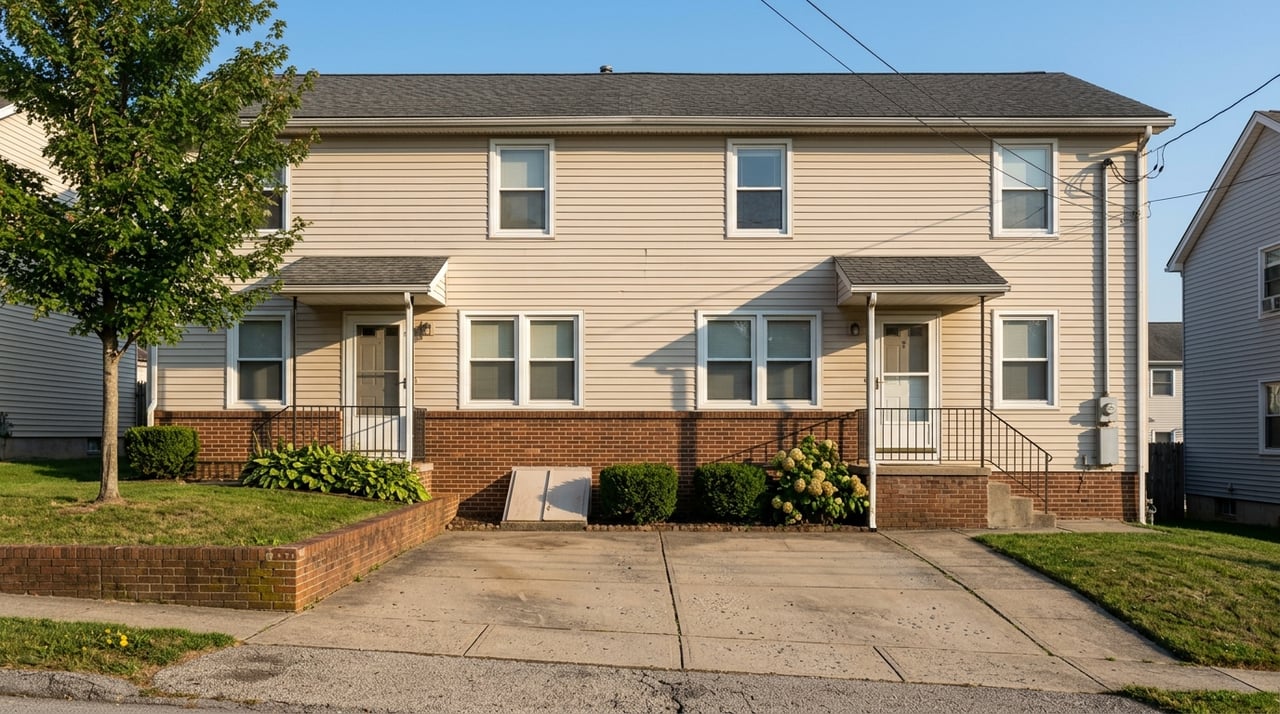
Not every market rewards the same property type, and North Huntingdon is no exception. Based on the township’s zoning framework and review timelines, detached single-family rentals are likely the most straightforward fit for many investors. Select duplex or small multi-family opportunities can also make sense when they are in permitted districts.
The township has six general zoning districts: Commercial, Industrial, Open Space, Planned Economic Development District, Planned Residential Development, and Residential. Within residential zoning, categories include R-1, R-1A, R-2, R-3, and R-4. The township also states that a lot may have only one principal structure, though some zoning districts allow duplexes and other multi-family buildings.
For many small investors, this points to a practical strategy. Instead of chasing large repositioning plays, you may be better served by targeting:
- Single-family homes with solid rental potential
- Older houses that can be updated into stronger rent ranges
- Duplexes in districts where they are allowed
- Under-improved properties that do not require long zoning timelines
That approach fits the local environment. It also reduces the risk of getting stuck in a long approval process before a property can start producing income.
Zoning and Timeline Risks to Know
Before you buy any value-add property, check the township rules early. North Huntingdon says zoning hearing board appeals take about seven weeks. It also states that residential building permits are reviewed in 15 business days, while subdivision and land development applications take a minimum of seven weeks.
Those timelines may not sound dramatic, but they can affect your carrying costs and renovation plan. If your deal only works with a major layout change, a use change, or a land development step, your timeline may stretch faster than expected. In a stable market like North Huntingdon, speed and simplicity often matter more than chasing an aggressive upside story.
Rent Benchmarks for Underwriting
When you underwrite rental property here, use gross rent numbers carefully. HUD’s FY2026 Pittsburgh HMFA Fair Market Rent schedule applies to Westmoreland County. Those benchmarks are:
- 0-bedroom: $1,001
- 1-bedroom: $1,077
- 2-bedroom: $1,299
- 3-bedroom: $1,661
- 4-bedroom: $1,789
HUD defines Fair Market Rent as a gross-rent estimate that includes shelter plus tenant-paid utilities, excluding telephone, cable or satellite TV, and internet. That definition matters because two rentals with the same base rent can perform very differently depending on utility responsibility.
North Huntingdon’s Census median gross rent is $1,062. That sits close to the 1-bedroom HUD benchmark and below the 2-bedroom benchmark. In practical terms, a well-updated 2-bedroom or 3-bedroom rental may earn more than the township median, but only if the layout, finish level, and utility setup support that rent.
Why Gross Rent Matters More Than Asking Rent
A common investor mistake is comparing deals based only on advertised rent. In this market, you should compare asking rent to gross rent benchmarks, not just base rent, because utility obligations can change the economics in a big way. Heat, water, sewer, and electricity can all affect what a tenant can afford and what your net operating picture looks like.
If you are evaluating a 2-bedroom or 3-bedroom property in Huntingdon Heights or nearby North Huntingdon, ask simple questions first:
- Who pays for heat?
- Who pays for water and sewer?
- Is the electric separately metered?
- Does the finish level support the target rent?
- Does the bedroom count function well in real life?
Those questions help you avoid overestimating income. They also help you compare properties on a more realistic basis.
Property Taxes Can Make or Break the Deal
In North Huntingdon, property tax is one of the most important operating costs to model correctly. The township’s 2026 proposed budget lists a 10.73 mill real estate tax rate for general purposes. Westmoreland County’s 2026 millage page shows 25.00 mills for county general and 3.48 mills for debt service. Norwin School District’s 2025-2026 final budget shows a 96.30-mill rate.
Using the township’s example of a $24,000 assessed value, the tax breakdown works out to:
- Township: $257.52
- County general: $600.00
- County debt service: $83.52
- Norwin School District: $2,311.20
- Total: $3,252.24
That total is before any owner-occupant relief, and that is a major point for investors. Pennsylvania’s homestead exclusion is generally for owner-occupied primary residences, so a pure rental property should not be underwritten with that benefit.
Just as important, the township’s 2026 proposed budget shows the real estate tax rate rising from 9.23 mills to 10.73 mills. That means you should refresh tax assumptions every budget cycle instead of relying on old estimates from a listing sheet or prior year analysis.
Local Compliance for Rental Owners
North Huntingdon has a rental-property code that investors should know before closing. The code requires owners of apartment buildings, trailer parks, and rental or lease properties to submit resident names and mailing addresses on a monthly basis. The code also sets fines of $100 to $1,000 for violations.
This is one of those details that may seem small until it becomes a problem. If you plan to self-manage or hold a small portfolio, build this reporting step into your process from day one. Clean operations help protect your cash flow just as much as a good purchase price.
Maintenance Planning in North Huntingdon
Good underwriting is not only about rent and taxes. You also need to think through repair timing and service coordination. The township states that water main breaks are reported to the Municipal Authority of Westmoreland County, sanitary manhole or pipe issues go to either the North Huntingdon Township Municipal Authority or Western Westmoreland Municipal Authority, and street-light problems go to West Penn Power.
Why does that matter? Because maintenance delays affect reserves, vacancy planning, and tenant satisfaction. The township also says residential building permits are reviewed in 15 business days, which is useful for planning smaller updates and repair schedules.
A Smart Investor Strategy for Huntingdon Heights
If you are targeting Huntingdon Heights or nearby parts of North Huntingdon, the market may reward patience more than aggression. This is not a place where every dated house becomes a home run. It is a place where careful buying, accurate tax modeling, and practical upgrades can help you build a steadier rental asset.
A strong local strategy often looks like this:
- Buy at a basis that still works after taxes
- Prioritize single-family homes or permitted small multi-unit properties
- Avoid deals that depend on long zoning or land development timelines
- Underwrite to realistic gross rent, not optimistic list rent
- Focus on layouts that suit longer-term suburban tenants
- Keep compliance and maintenance planning tight
That kind of discipline is especially important in a market with a high owner-occupied share and stable household patterns. You are not chasing rapid rent growth here. You are building margin through better decisions.
If you want help identifying value-add opportunities, reviewing rent logic, or narrowing down which North Huntingdon properties make sense for your goals, Vanessa Doss offers practical, local guidance for investors who want to buy with clarity.
FAQs
What makes North Huntingdon different from a high-growth rental market?
- North Huntingdon is mostly owner-occupied, with a 90.1% owner-occupied housing rate and high household stability, so investors often do better with disciplined buying and long-term planning than with aggressive rent-growth assumptions.
What rental property types fit North Huntingdon best?
- Detached single-family rentals are often the most straightforward option, while some duplexes and small multi-family properties may work in permitted zoning districts.
What are the Fair Market Rent benchmarks for Westmoreland County?
- HUD’s FY2026 Pittsburgh HMFA benchmarks are $1,001 for a studio, $1,077 for a 1-bedroom, $1,299 for a 2-bedroom, $1,661 for a 3-bedroom, and $1,789 for a 4-bedroom.
Why should investors in North Huntingdon focus on gross rent?
- Gross rent includes shelter plus tenant-paid utilities, so it gives you a better way to compare actual deal performance than base rent alone.
How important are property taxes for North Huntingdon rental property?
- Property taxes are a major expense to model carefully because township, county, debt service, and school district millage can materially affect your cash flow.
Does a North Huntingdon rental property qualify for homestead tax relief?
- A pure rental property generally should not be underwritten with Pennsylvania homestead exclusion benefits because that relief is generally for owner-occupied primary residences.
What local rental compliance rule should North Huntingdon investors know?
- North Huntingdon requires owners of rental or lease properties, apartment buildings, and trailer parks to submit resident names and mailing addresses monthly, and violations can lead to fines.
How long do permits and zoning reviews take in North Huntingdon?
- The township says residential building permits are reviewed in 15 business days, while zoning hearing board appeals and subdivision or land development matters can take about seven weeks or more.